Disclosure: As an Amazon Associate, Varnilo earns from qualifying purchases at no extra cost to you. Our guides are built on deep manufacturer specification analysis, collector forum consensus, and verified owner reports.
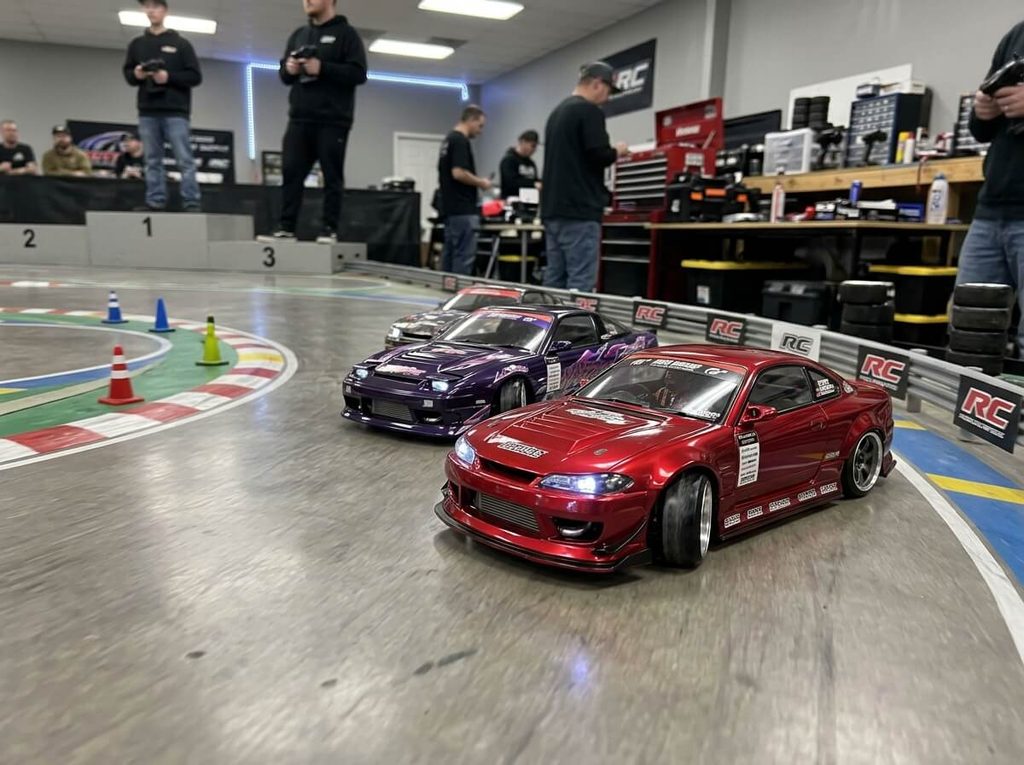
Sliding an RC vehicle with surgical precision across tight living room turns or slick garage concrete requires vastly different mechanical geometry than typical bashers. Choosing true hobby grade drift cars means looking beyond cheap toy-grade brushed motors with zero steering lock, focusing instead on chassis rigidity, variable steering EPA (End Point Adjustment), integrated gyroscopes, and specific plastic tire durometers designed to glide smoothly over delicate hardwood and sealed concrete surfaces without causing surface scuffs.
Rather than relying on closed-room marketing claims, our evaluation synthesizes official manufacturer engineering documentation alongside hundreds of hands-on technical build logs from enthusiast communities like r/rcdrift and the veteran builders over at r/rccars. Whether your track space is a 10×10 foot hardwood living room or a sweeping two-car garage bay, this guide outlines the platforms that deliver authentic balance and long-term modularity.
Kyosho Mini-Z AWD MA-020 Readyset
The benchmark for residential drifting. Utilizing a precision shaft-driven all-wheel-drive system packed inside an ultra-compact 1:28 scale footprint, the Kyosho MA-020 delivers instant throttle control in tight living rooms and hallways. Enthusiasts consistently praise its low-wear POM plastic drift tires, proprietary VCS front suspension, and scale diecast-quality Auto Scale bodies that look exceptional displayed on a shelf between battery packs.
| Model | Key Specs & Materials | Community Verdict | Amazon Listing |
|---|---|---|---|
| Kyosho Mini-Z AWD MA-020 | 1/28 Scale; Shaft AWD; VCS Front Suspension; POM Slicks; Syncro KT-531P Radio | Unrivaled king for indoor hardwood, tiles, and tight spaces. Highly collectible scale hard bodies. | Check Price → |
| MST RMX 2.5 RTR | 1/10 Scale; Rear-Wheel Drive (RWD); Integrated MGX Gyro; High-Angle Steering; Polycarbonate Body | The gold-standard beginner chassis for garages, basement concrete, and competition drift tracks. | Check Price → |
| Redcat RDS 1/10 Competition RWD | 1/10 Scale; Carbon Fiber Plates; Brushless 3300KV Motor; RDS Drift Gyro; Fully Adjustable Ackermann | High-spec carbon fiber chassis offering top-tier tuning potential straight out of the box for wide garage setups. | Check Price → |
Detailed Technical Evaluation: The Top Hobby Grade Drift Cars
1. Kyosho Mini-Z AWD MA-020 Readyset (Best for Living Rooms & Hardwood Floors)
For drivers who want to drift inside their homes without reorganizing furniture or damaging baseboards, the Kyosho Mini-Z AWD MA-020 series remains in a category of its own. Measuring roughly 6.5 inches in length (1:28 scale), this Japanese engineered micro platform is built around a compact shaft-driven drivetrain with front and rear gear differentials. Its Variable Camber Suspension (VCS) optimizes tire contact patches through hard steering throws, keeping the vehicle stable even over slight floorboard imperfections.
On community discussion hubs like r/MiniZ, owners consistently emphasize that while 1/10 scale rear-wheel-drive cars require dedicated hall spaces, the AWD MA-020 can initiate tandem-style drifts around chair legs and coffee tables with ease. Verified buyers report that the stock hard polyoxymethylene (POM) resin compound tires produce virtually zero black scuff marks on sealed oak, polyurethane finishes, or tile flooring. The platform ships factory assembled with a Syncro KT-531P transmitter that provides dual-rate steering and a training throttle cap.
- Compact 1:28 dimensions enable full tandem drift lines in rooms smaller than 12×12 feet.
- Ultra-dense POM drift tires glide without leaving rubber residue or scuffs on finished flooring.
- Interchangeable museum-grade Auto Scale body shells with realistic offsets and light-kit compatibility.
- Runs on 4 standard AAA alkaline or NiMH cells, lacking native high-output LiPo performance out of the box.
- Small chassis requires meticulous tweezers-based maintenance if indoor pet hair enters the diff cases.
2. MST RMX 2.5 RTR 1/10 RWD (The Garage Floor Drift Benchmark)
Max Speed Technology (MST) is credited within RC circles for transforming competition rear-wheel-drive drifting into an accessible ready-to-run package. The RMX 2.5 RTR platform is explicitly tailored for broad, smooth floor expanses—making it the consensus weapon of choice for two-car garages, finished basements, and polished industrial slabs. Unlike all-wheel-drive bashers, the RMX 2.5 operates with authentic counter-steer driving physics, relying solely on its rear differential for power while steering knuckles sweep through ultra-wide steering lock angles.
The core of its stability on smooth concrete lies in the included MST MGX steering gyro. Across hundreds of builder threads, experienced drifters note that this gyro counter-steers milliseconds faster than human reflexes, catching aggressive spins without oscillating. The chassis features multiple motor mounting locations (upper and lower gravity centers) to manipulate rear chassis roll and grip. Verified owners frequently highlight that the heavy-duty composite bathtub chassis withstands minor collisions against garage door tracks and baseboards without deforming alignment geometry.
- Authentic 1/10 rear-wheel-drive dynamics delivering realistic counter-steering angles and weight transfer.
- High-grade integrated drift gyro eliminates snap-oversteer on smooth garage floors.
- Massive aftermarket ecosystem with full aluminum, carbon fiber, and titanium upgrade paths.
- 1/10 scale dimensions require at least a 15×15 foot clear area to maintain fluid tandem lines.
- Requires separate purchase of a 2S shorty LiPo battery pack and compatible balance charger.

3. Redcat RDS 1/10 Competition Spec RWD Drift Car (High-Spec Carbon Value)
Traditionally, building a carbon-fiber, competition-ready RWD drift machine meant buying bare unbuilt chassis kits and spending weeks sourcing matching electronics. Redcat changed the competitive entry landscape with the RDS. Engineered natively on double-deck carbon fiber chassis plates, the RDS incorporates a competition-level carbon upper deck, motor mount plates, and shock towers right out of the box.
Equipped with a sensorless 3300KV brushless motor and a dedicated high-speed drift steering servo, the RDS delivers instant low-end throttle response critical for sustaining smooth sweeping drifts across garage floors. Builders on enthusiast forums praise Redcat’s inclusion of an adjustable Ackermann steering rack. This allows users to alter the toe and slip angle of the leading versus trailing front wheel, optimizing how the car holds angle through high-speed garage sweeping turns versus low-speed hairpins.
- Genuine carbon fiber double-deck chassis reduces flex and increases torsional responsiveness.
- Pre-installed brushless power system provides consistent torque curves across extended sessions.
- Fine-tunable steering geometry with adjustable Ackermann angles and aluminum oil-filled shocks.
- Sensorless brushless motor can occasionally exhibit slight low-RPM cogging compared to high-end sensored competition ESCs.
- Factory default gyro gain often requires manual retuning before achieving optimal stabilization.
Surface Physics & Tuning: Indoor Hardwood vs. Polished Garage Concrete
Operating high-precision drift cars on residential indoor surfaces requires understanding friction coefficients and tire thermal dynamics. Many newcomers incorrectly assume all smooth floors handle identically; in reality, finished residential hardwood and garage concrete behave like night and day.
1. The Hardwood Floor Dilemma: Protecting Polyurethane Finishes
On interior oak, maple, or engineered flooring, the primary concern is surface protection. Standard rubber or soft compound silica tires from touring cars will smear friction marks and collect pet hair, rapidly binding drive pins. Real drift platforms rely on non-marking hard plastic compounds—specifically Polyoxymethylene (POM) or high-density Polyethylene (PE).
These hard plastics slide with remarkably low friction, requiring negligible torque to break traction. Because the tires never achieve vulcanized grip, motor temperatures remain cool, and your floor finish is preserved. Furthermore, the micro scale of a 1/28 car like the Mini-Z generates significantly lower impact kinetic energy, ensuring that baseboards and furniture legs avoid denting during accidental boundary collisions.
2. Polished Garage Floors & Sealed Concrete: Scale & Gyro Control
Garages offer the expansive, open turning radii that 1/10 scale drift machines thrive on. However, concrete contains microscopic dust and surface variations that alter traction from one square foot to another. To conquer this, 1/10 scale RWD platforms rely on electronic counter-steer gyros. By sampling yaw rates across three axes, the gyro makes micro-adjustments to the steering rack to counteract rear-end washout.
For garage sliding, owners typically swap to slightly softer drift compounds (such as MST Gold or Topline HDPE tires) to produce a realistic “bite” through the throttle sweep without sacrificing progressive slide transitions.
Frequently Asked Questions About Indoor RC Drifting
Will hard plastic RC drift tires damage my indoor hardwood or laminate?
No, quality POM and hard PE drift tires will not scratch clean indoor hardwood or laminate surfaces. The main culprit of scratching is not the wheel itself, but trapped debris. If loose sand, grit, or pet dander clings to the tires or floor, the sliding motion can drag those particles across the finish. We strongly advise sweeping or microfiber-dusting your indoor driving area prior to running.
What is the difference between AWD and RWD in RC drifting?
AWD (All-Wheel-Drive), often referred to in smaller scales as 50/50 or Counter-Steer (CS), powers all four wheels. It pulls the vehicle through the turn, making it much easier to control in tight, confined rooms like living spaces. RWD (Rear-Wheel Drive) powers only the back axle, requiring precise throttle modulation, a steering gyro, and authentic counter-steering just like full-size Formula Drift cars. RWD is the standard for 1/10 scale garage and competition drifting.
Why does my RC drift car keep spinning out on smooth floors?
Frequent spin-outs usually trace back to three common culprits: excessive throttle application, incorrect tire compound for the surface, or improperly set gyro gain. On slick surfaces, apply throttle gently to maintain wheel speed without overloading lateral momentum. On RWD cars, verify that your gyro direction is set correctly; if reversed, the gyro will actively throw the car into an uncontrollable spin rather than stabilizing it.
Can I run a 1/10 scale drift car indoors inside an apartment?
While technically possible, running a 1/10 scale drift vehicle inside a typical apartment living room is like driving a supercar in a school zone. With an overall length of nearly 18 inches and wide steering angles, 1/10 cars need room to build inertia. For apartment hallways, bedrooms, or compact living spaces, a 1/28 scale model like the Kyosho Mini-Z AWD MA-020 is substantially more practical and rewarding.
Ready to select your chassis? Check out the full line of enthusiast-approved hobby grade drift cars on Amazon to find the ideal match for your available floor space.