Disclosure: As an Amazon Associate, Varnilo earns from qualifying purchases at no extra cost to you. Our guides are built on deep manufacturer specification analysis, collector forum consensus, and verified owner reports.
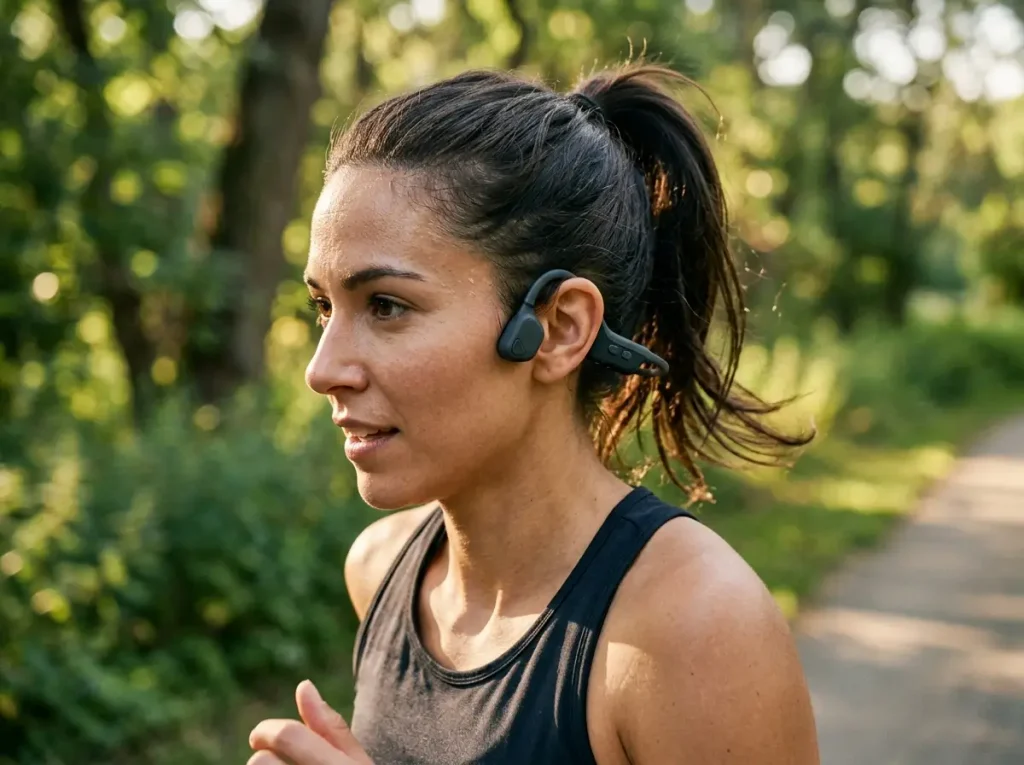
For endurance runners and road cyclists, situational awareness is not merely a convenience—it is a critical safety parameter. Traditional noise-canceling earbuds isolate the auditory canal, leaving athletes vulnerable to oncoming traffic, electric vehicles, and warning shouts. Evaluating the best bone conduction sports headphones requires cutting through marketing jargon to examine transducer physics, frame clamping force, sweat ingress protection, and real-world acoustic clarity. Instead of relying on simulated indoor testing, our analysis cross-references factory engineering blueprints with multi-year endurance athlete feedback from communities like the r/running community and dedicated road cycling forums.
Shokz OpenRun Pro
Praised across endurance cycling and marathon training forums for its 9th-generation bone conduction transducers (TurboPitch technology), featherlight 29-gram titanium frame, and consistent 10-hour battery life. Long-term owner registries confirm that its refined frequency response delivers rich mid-tones without masking approaching vehicular noise.
| Model | Key Specs & Materials | Community Verdict | Amazon Listing |
|---|---|---|---|
| Shokz OpenRun Pro | Full titanium wrap-around; IP55 rating; 10-hr runtime; proprietary magnetic induction charge; dual noise-canceling mic. | Widely considered the gold standard for road audio clarity and long-haul ergonomic comfort over eyewear. | Check Price → |
| Shokz OpenMove | Titanium band with polycarbonate earhooks; IP55 rating; 6-hr runtime; standard USB-C port; PremiumPitch 2.0. | Praised on frugal athlete threads for its convenient direct USB-C port and dependable mechanical durability. | Check Price → |
| Suunto Wing | Titanium alloy and silicone casing; IP67 waterproof; red safety LEDs on transducers; head motion controls; 10-hr base battery. | Favored by gravel riders and trail runners for physical illumination and rugged submersible water resistance. | Check Price → |
Engineering Assessment of the Top Contenders
1. Shokz OpenRun Pro: Flagship Acoustic Fidelity
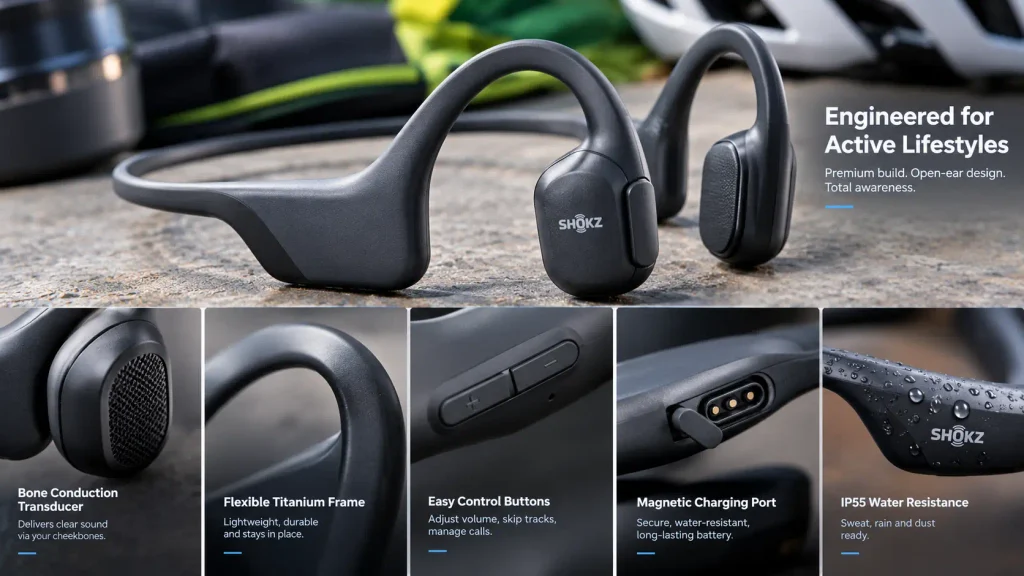
The Shokz OpenRun Pro represents the technical pinnacle of bone conduction transducer miniaturization. Shokz incorporates its 9th-generation bone conduction tech, known internally as TurboPitch. Two added bass enhancers sit inside the chassis, directing low-frequency vibration toward the cheekbone to round out audio that traditionally sounds tinny through temporal acoustic transfer. The chassis uses an uninterrupted nickel-titanium (Nitinol) memory alloy core cloaked in medical-grade silicone, weighing just 29 grams.
Discussions across the r/BuyItForLife community highlight the structural longevity of Shokz frames, noting that the titanium band withstands being jammed into hydration vests and jersey pockets without losing clamping tension. On the road, cyclists report that the transducer pads rest cleanly forward of the tragus, allowing sunglasses arms and helmet retention straps to sit flush against the skull without pressure hotspots.
- Dual bass-enhancing acoustic ports for superior spoken-word and rhythm clarity.
- Continuous-tension Nitinol memory frame prevents shifting during sprint intervals.
- Fast-charging circuit provides 1.5 hours of playback from a 5-minute top-up.
- Proprietary magnetic charging cable requires carrying a dedicated wire on trips.
- IP55 rating resists heavy sweat and rain, but is not rated for full submersion.
2. Shokz OpenMove: The Practical Daily Training Workhorse
For athletes prioritizing utility and standard connectivity over premium bass resonance, the Shokz OpenMove uses PremiumPitch 2.0 dual-transducer hardware mounted to a rigid polycarbonate-and-titanium hybrid frame. Weighing 29 grams, it matches the overall mass of the flagship line while adopting a distinct squared-transducer profile. The critical structural difference lies in the charging interface: the OpenMove features an integrated USB-C port protected beneath a recessed rubber gasket.
Aggregated feedback from verified Amazon purchasers emphasizes the convenience of ditching proprietary cables. Commuters and marathon trainers frequently note that the OpenMove can be recharged from standard power banks, vehicle USB ports, or laptop cables. While audiophiles on fitness subreddits observe more physical cheekbone tickling at maximum volume due to older transducer balancing, its mid-range frequencies remain tuned precisely for vocal podcasts and ambient-aware navigation prompts.
- Universal USB-C charging eliminates reliance on proprietary charging pucks.
- Three selectable EQ presets (Standard, Vocal Booster, and Earplug Mode).
- Rigid hook geometry keeps transducers seated firmly during road cycling sprints.
- Battery capacity caps out at 6 hours, requiring frequent weekly charging.
- Slightly thicker ear-hook profile creates minor friction with thick sunglass temples.
3. Suunto Wing: Integrated Lighting and Harsh-Weather Durability
Finnish adventure navigation brand Suunto approached the bone conduction form factor specifically from an outdoor safety angle. The Suunto Wing distinguishes itself from the competition through dual red safety LED strips built directly into the exterior housing of both cheekbone modules. These lights can be programmed via the Suunto smartphone app to stay solid, pulse, or flash in rhythmic cadences, providing immediate side-profile visibility to drivers crossing intersections at dusk.
Cycling enthusiasts on road and gravel cycling communities frequently praise the Wing’s hands-free gesture control. Internal gyroscopic and accelerometer sensors detect head movements, allowing riders to answer incoming phone calls or skip music tracks with a quick head shake or nod, eliminating the dangerous habit of removing hands from drop handlebars. Furthermore, an IP67 waterproof certification means the unit can withstand full immersion and direct high-pressure hose rinsing after mud-spattered gravel rides.
- Integrated red lateral LED safety lights improve cyclist visibility at road junctions.
- IP67 complete dust-tight and submersible water ingress rating.
- Head movement control algorithms allow true hands-on-the-handlebars operation.
- Heavier mass at 33 grams compared to Shokz units, noticeable on prolonged runs.
- Premium price tier sits higher than non-illuminated competitors.
Acoustic Engineering: How Bone Conduction Sports Headphones Preserve Safety
Traditional in-ear sports earbuds work via air conduction: sound pressure waves propagate through the external auditory canal, vibrating the tympanic membrane (eardrum), which subsequently moves the auditory ossicles (malleus, incus, and stapes) to stimulate the cochlea. Bone conduction bypasses the outer and middle ear altogether. Electromechanical transducers rest directly on the zygomatic arch and temporal bone, transmitting high-frequency mechanical vibrations straight into the inner ear fluid.
Because the auditory meatus remains completely unoccluded, athletes experience an unhindered natural acoustic spectrum. When choosing bone conduction sports headphones, understanding this mechanism clarifies key design tradeoffs:
- Wind Noise vs. Ambient Noise: On a road bike traveling at 20+ mph, atmospheric turbulent wind shear generates broadband acoustic clutter around the ear. Bone conduction bypasses ear canal turbulence for vocal audio, yet allows the rider to discern engine RPM shifts and passing tire scrub from vehicles approaching from behind.
- Transducer Clamping Pressure: For bone conduction to function efficiently, the transducer must maintain constant physical contact against cranial bone tissue. If clamping force is too weak, audio volume drops precipitously; if too high, tension headaches develop over long mileage. Top designs employ calibrated Nitinol alloy bands that distribute tension evenly behind the occipital lobe.
- Helmet and Eyewear Layering: A frequent complaint in cycling gear forums is mechanical stacking conflict. The proper ergonomic layering sequence verified by multi-season riders is: sunglasses arms closest to the skull, headphone earhooks layered over the sunglass arms, and bicycle helmet retention straps pulled firmly over the entire configuration.
Frequently Asked Questions
Can motorists hear music leaking from bone conduction headphones?
At standard listening volumes (50% to 70%), acoustic sound leakage from modern bone conduction transducers is virtually undetectable outdoors from more than two feet away. Transducer enclosures use phase-canceling acoustic vents to minimize exterior air leakage. Only at maximum volume in a dead-silent room can a nearby bystander faintly hear track leakage.
How do bone conduction headphones perform in heavy rain or high humidity?
Look specifically at the IP rating code. IP55 models (like the OpenRun Pro and OpenMove) resist sustained sweat, rain squalls, and splashing from road puddles without circuit degradation. For athletes participating in ultra-endurance trail running, torrential downpours, or events requiring direct tap water wash-downs, an IP67 rating (such as on the Suunto Wing) provides full dust sealing and water immersion survival up to 1 meter depth for 30 minutes.
Will bone conduction headphones work if I wear thick cycling helmet straps and sunglasses?
Yes. The wrap-around neckband profile is specifically sculpted to drop behind the skull, resting below the helmet adjustment dial. As long as you position the transducer pads flush against your cheekbones and slip the flexible earhooks above your sunglass arms, you will experience full vibrational contact without slippage.
Why does bass feel like a vibration on the skin rather than standard punchy low-end?
Because bone conduction converts electrical signals into physical kinetic vibrations, deep sub-bass frequencies (below 80 Hz) physically shake the transducer casing against the skin. Manufacturers tune sports models with mid-frequency vocal curves to prevent tickling sensations while preserving podcast intelligibility and rhythmic cadence.
Explore the complete selection of top-rated, field-proven open-ear training headsets by browsing the Bone Conduction Sports Gear Directory on Amazon →