Disclosure: As an Amazon Associate, Varnilo earns from qualifying purchases at no extra cost to you. Our guides are built on deep manufacturer specification analysis, collector forum consensus, and verified owner reports.
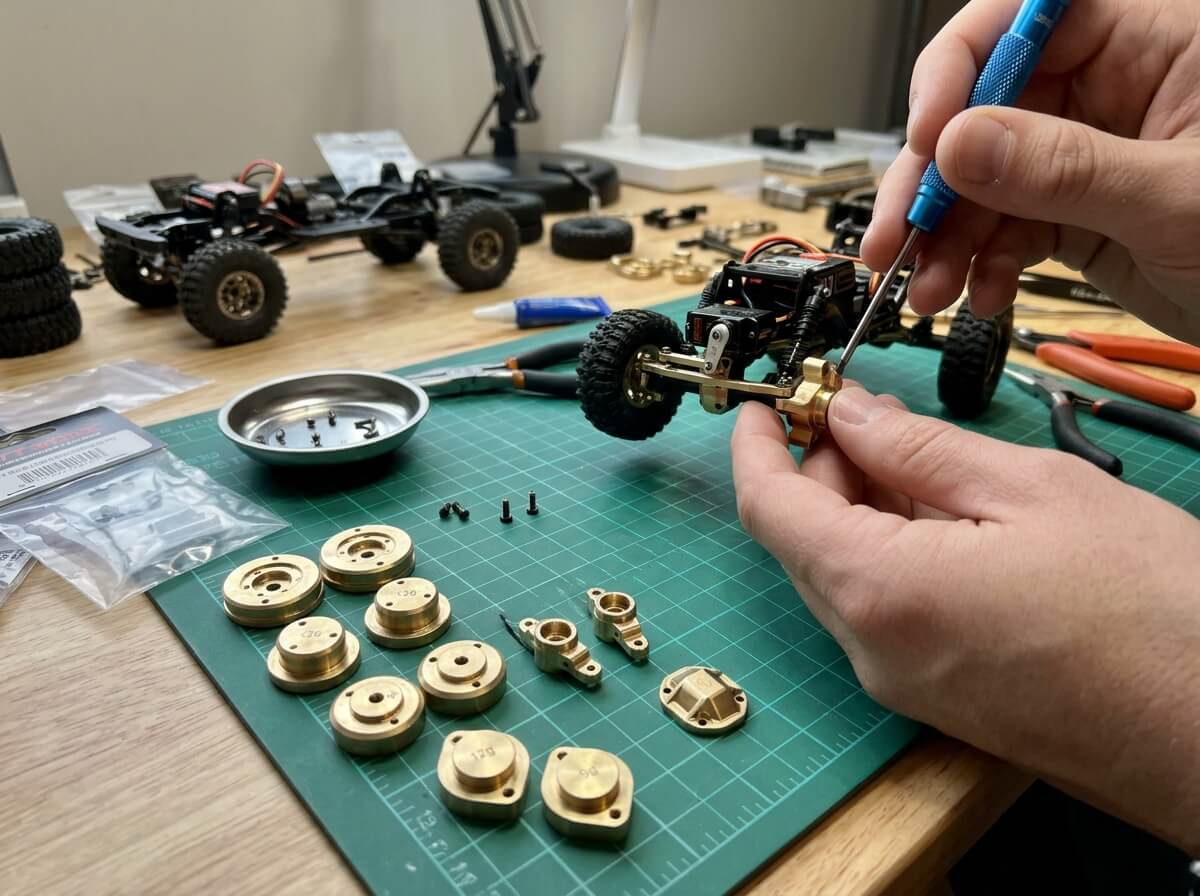
When tackling steep inclines, side-hill traverses, and loose technical rock lines, adding strategic unsprung mass is the single most effective upgrade you can make to micro rock crawlers. Installing high-quality 1:18 RC brass weights dramatically lowers your vehicle’s center of gravity (CoG), suppressing rollover tendencies and increasing tire bite. Whether you are fine-tuning a factory setup detailed in our round-up of the best hobby grade 1:18 RC rock crawlers or optimizing custom axle geometry, replacing stock plastic portal covers, wheel hexes, and beadlock rings with precision-machined brass components turns light trail rigs into relentless rock gliders.
INJORA Heavy CNC Brass Beadlock Wheel Weights & Portal Covers (1:18 Scale)
Engineered from ultra-dense CNC-machined brass with a clean black-coated finish, INJORA’s upgraded brass system delivers optimal low-slung weight distribution without sacrificing scale realism. Collector forum analysis across r/rccars highlights its precision tolerances and perfect clearance with stock steering links.
| Model | Key Specs & Materials | Community Verdict | Amazon Listing |
|---|---|---|---|
| INJORA Heavy Brass Set | Solid CNC Brass, Black E-Coated finish, ~48g per wheel set, high clearance design. | Gold standard for TRX4M and 1:18 platforms; zero slop and sleek stealthy look. | Check Price → |
| Treal Heavy Duty Brass Knuckles | Raw Polished Brass, CNC Billet machining, ~13g per knuckle, oversized bearings included. | Top recommendation for eliminating front end float without adding excessive rotational drag. | Check Price → |
| HOBBYPARK Brass Diff Covers & Hexes | Precision Cast Brass, +7mm hex extension width, ~11g axle cover mass. | Best budget combination upgrade to widen track stance while pinning down axles. | Check Price → |
In-Depth Spec & Community Breakdown of top 1:18 RC Brass Upgrades
1. INJORA Heavy CNC Brass Beadlock Wheel Weights & Portal Covers
INJORA has built a powerhouse reputation among micro crawling enthusiasts for manufacturing precision-machined aftermarket components that dropped directly into factory geometry. Their heavy brass wheel weight set adds approximately 48 grams per wheel position directly at the lowest point of the vehicle’s footprint. The outer surface features a corrosion-resistant black electrophoretic coating, ensuring subtle aesthetics for scale builders who prefer subtle hardware over bright raw brass.
Community discussions on popular hobbyist hangouts like the RCCrawler Forums frequently cite INJORA’s tight tolerances. Unlike cheap cast alternatives, these CNC-milled brass rings fit tightly inside standard 1.0-inch beadlock wheels without rubbing against steering tierods or shock rod ends.
- Adds non-rotational or rotational mass directly where maximum traction is needed
- Electrophoretic black finish prevents brass oxidation while preserving scale looks
- CNC tolerances eliminate wheel wobble and binding in full lock turns
- Requires high-torque aftermarket steering servos to handle increased leverage
- May require negative offset wheels when mounting on ultra-narrow custom builds
2. Treal Heavy Duty CNC Brass Steering Knuckles & Portal Housings
Treal Hobby is revered for manufacturing competition-tier aluminum and brass parts. Their CNC brass steering knuckles for 1:18 platforms are machined from high-grade solid billet brass, offering unmatched structural rigidity compared to stock nylon plastics. Each steering knuckle weighs roughly 13 grams, delivering concentrated front-end unsprung weight that keeps the front tires pressed firmly into rock surfaces during vertical climbs.
Owners consistently praise Treal’s included hardware paket, which features pre-fitted high-precision rubber-shielded bearings. By replacing weak stock steering hubs with these heavy-duty brass knuckles, drivers eliminate axle flex and slop under heavy throttle loads.
- Concentrates weight down forward to improve steep slope stability
- Included Japanese rubber-sealed ball bearings eliminate shaft friction
- Eliminates flex in front steering assembly for surgical line choices
- Raw brass finish dulls over time if exposed to damp outdoor trail conditions
- Slightly higher price point compared to entry-level cast alloy packages

3. HOBBYPARK Heavy Brass Differential Covers & Extended Hex Hubs
For drivers seeking maximum versatility at an accessible price point, the HOBBYPARK heavy brass differential cover and hex hub combo offers immediate terrain performance improvements. The differential covers replace lightweight stock plastic housings with solid brass castings, adding 11 grams of weight directly over the axle shafts while protecting delicate internal ring and pinion gears from sharp rock impacts.
Furthermore, the included +7mm extended brass wheel hexes broaden your vehicle’s overall track width. This widened stance acts in tandem with the lower CoG to virtually eradicate side-hill roll-overs when side-climbing dynamic obstacles.
- Widens vehicle track stance to increase lateral anti-tilt stability
- Provides physical rock-guard protection for sensitive axle differential gears
- Highly cost-effective package offering multiple unsprung weight upgrades
- Extended hex width increases turning radius slightly on tight indoor courses
- Requires threadlock on axle pin set screws to avoid loosening on trails
How to Weight Your Rig Using 1:18 RC Brass Weights
Upgrading a micro crawler is not simply a matter of bolting on as much brass metal as possible. Strategic weight placement determines whether your rig crawls like a goat or struggles under excessive mechanical stress. To achieve ideal crawling dynamics, keep these technical tuning factors in mind:
1. Sprung Weight vs. Unsprung Mass
In scale crawling dynamics, unsprung weight refers to components located below the suspension springs (axles, steering knuckles, diff covers, wheel rings, and hex hubs). Adding weight here pins the tires to the ground without compressing the chassis suspension or making the body top-heavy. Conversely, adding heavy metal chassis rails or brass body mounts (sprung mass) hurts vertical climbing stability by raising the chassis center of gravity.
2. The 60/40 Weight Distribution Rule
Experienced RC crawler builders aim for a forward weight bias of roughly 60% front and 40% rear. When ascending steep obstacles, weight shifts toward the rear axle. By placing heavier brass steering knuckles or heavy brass wheel weights on the front axle while keeping the rear axle lighter, you prevent the front bumper from lifting into a wheelie on near-vertical obstacles. You can dive deeper into chassis geometry differences in our detailed Traxxas TRX-4M vs Axial SCX24 comparison guide.
3. Rotational vs. Non-Rotational Brass Upgrades
Keep in mind that heavy brass wheel rings act as rotational mass. While heavy rotational mass generates mechanical momentum to pull your vehicle over ledges, it also places higher rotational torque strain on factory plastic transmission gears and small stock steering servos. Non-rotational brass upgrades—such as axle diff covers, brass steering knuckles, and portal covers—provide lower center-of-gravity benefits without straining micro motors or electronic speed controllers (ESCs).
Frequently Asked Questions About 1:18 RC Brass Weights
Why are brass weights preferred over aluminum for 1:18 RC crawlers?
Brass boasts a density of roughly 8.4 to 8.7 g/cm³, whereas aluminum measures only about 2.7 g/cm³. Because 1:18 micro crawlers have tight clearance envelopes, brass provides three times the weight of aluminum within the exact same physical size profile, keeping unsprung weight low without causing tire rubbing or steering binding.
Will installing brass wheel weights ruin my stock steering servo?
Adding heavy rotational brass wheel weights or heavy steering knuckles increases friction load on your front steering system. While mild brass upgrades (10–20 grams per wheel) work fine on stock servos, heavy brass setups benefit significantly from upgrading to a coreless high-torque digital metal-gear servo (such as 7kg to 11kg rated units).
Should I put brass weights on both the front and rear axles?
For optimal rock climbing, it is best to place heavier brass weights on the front axle and lighter brass weights (or stock parts) on the rear axle. This maintains a forward-biased 60/40 center of gravity, preventing your crawler from flipping backward when climbing steep rock faces.
How do extended brass wheel hexes improve stability?
Extended brass wheel hexes push your wheels outward by 4mm to 8mm on each side. Broadening the total track width creates a wider base, which dramatically lowers the rollover pivot angle during side-hill crawling and aggressive off-camber maneuvers.